

Vehicle Theft
Vehicles may be targeted for theft where access, lighting or natural surveillance is limited.
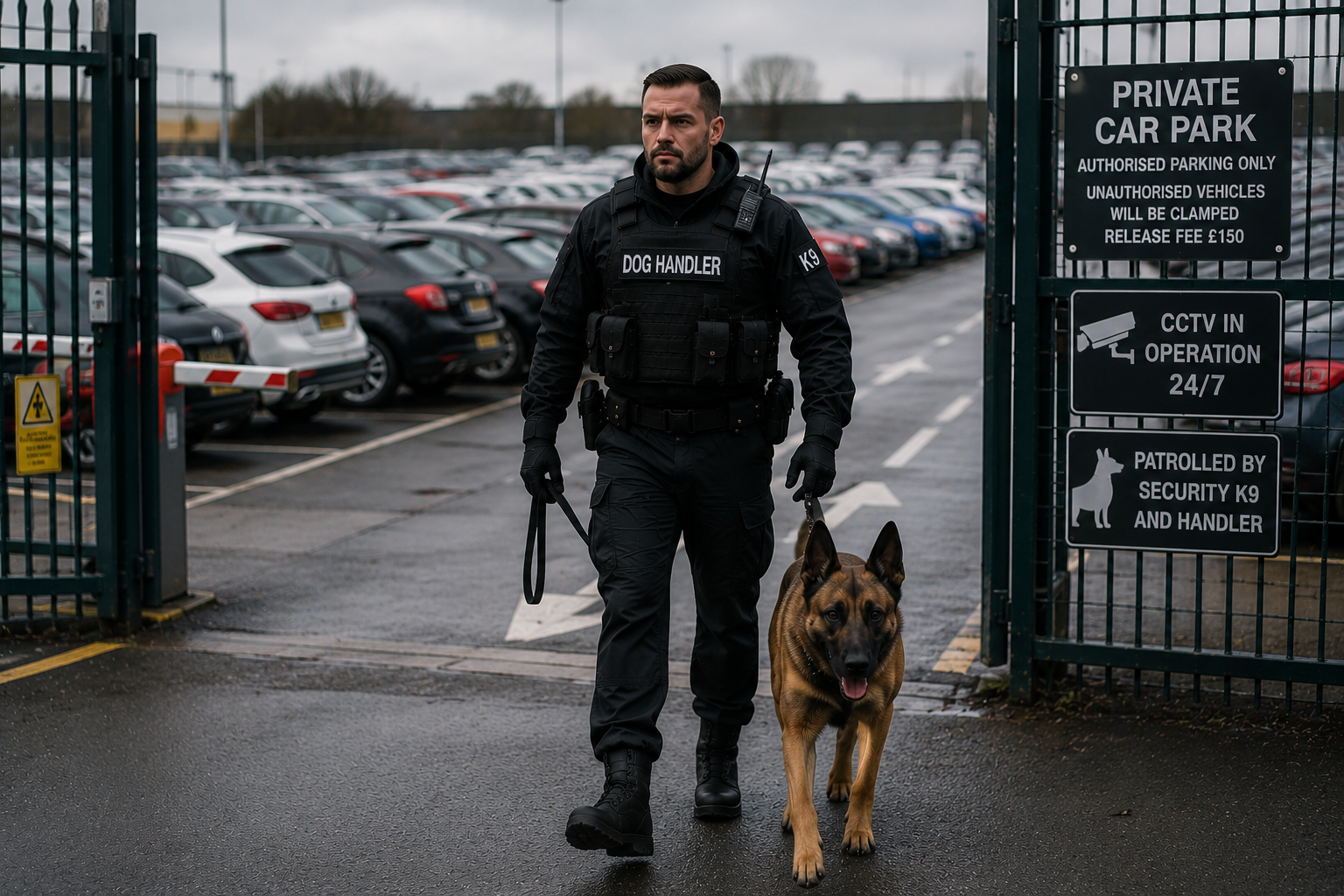
Car Park Security Services
 NASDU
NASDU SafeContractor
 SIA
SIA SafePQQ
 Fully
Fully BS 7858
 ISO 9001
 BS 8517-1
Client feedback repeatedly highlights professionalism, responsiveness and short-notice deployment.

Car parks become more exposed overnight, at weekends, during closures or when vehicles remain unattended for extended periods.
Reduced activity can give unauthorised persons more time to approach vehicles, test entrances or move through the site without being noticed.
Multiple levels, ramps, stairwells, perimeter edges, isolated bays and areas outside camera coverage can make a car park difficult to oversee from one fixed position.
Where normal activity and fixed security measures leave gaps, the car park may require an active on-site security presence during its most exposed periods.
The main car park risks are those that expose vehicles and legitimate site users while creating repair costs, insurance administration, complaints and additional management time.
Vehicles may be targeted for theft where access, lighting or natural surveillance is limited.
Tools, personal belongings, stock and equipment left inside vehicles may attract opportunistic or planned break-ins.
Catalytic converters, wheels, number plates and other vehicle parts may be removed from unattended vehicles.
Vehicles, barriers, payment equipment, signage and lighting may be damaged, creating repair costs and disruption.
Open pedestrian routes, weak boundaries or uncontrolled entrances can allow people to enter or remain without permission.
Poorly observed areas can increase concern for staff, residents, customers and other legitimate users entering or leaving the car park.

CCTV, ANPR, barriers and access systems can support car park security, but they do not provide physical movement across the site or an on-site assessment when suspicious activity is identified.
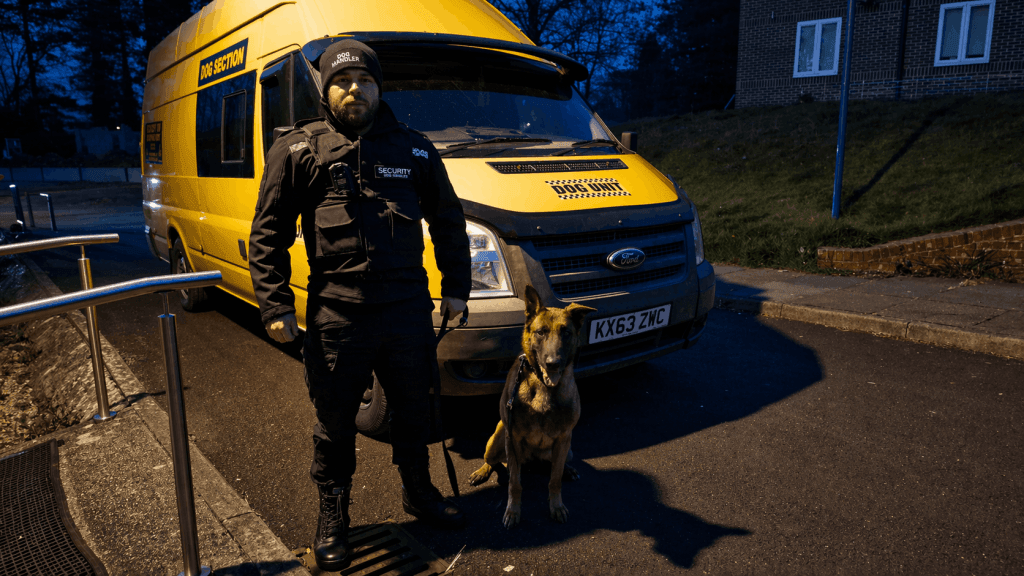
A trained security dog handler provides a controlled presence across agreed areas, improving visibility beyond entrances, exits and other fixed security positions.
Patrol priorities and site procedures are agreed before deployment so that suspicious activity, damage and signs of interference are handled consistently.
Read how our security dog handler services are planned and managed.
Agreed routes can cover parking bays, ramps, stairwells, pedestrian routes, entrances, exits and perimeter areas.
A controlled handler and dog presence can discourage vehicle crime, trespass and antisocial behaviour before an incident develops.
Suspicious activity, damage or signs of vehicle interference can be assessed, documented and communicated through agreed procedures.
Regular movement through the car park can help identify damage, interference or unusual activity before it remains unnoticed for an extended period.
Patrols can check barriers, gates, pedestrian entrances, stairwells and perimeter sections for damage or interference.
The handler can move through bays, ramps, lower levels and boundary areas that are difficult to observe continuously from one camera position.
Security dog handler cover is not required for every car park. It is most relevant where the layout, operating pattern or incident history creates a need for visible patrol movement and controlled on-site assessment.
Each deployment is planned around how the site operates, what needs protecting and where patrol visibility will have the strongest deterrent effect.
Multiple levels, isolated bays, ramps, stairwells or perimeter areas make the car park difficult to oversee from one position.
Vehicle theft, break-ins, parts theft or deliberate damage have occurred before or are becoming recurring concerns.
Staff, resident, fleet or customer vehicles remain unattended overnight or during extended closures.
Low occupancy, quiet periods or restricted public activity reduce the chance of suspicious behaviour being noticed.
Cameras, barriers or access controls do not provide sufficient visibility or physical assessment across the site.
A further incident could create significant repair costs, claims, complaints or disruption for the operator or managing agent.
Our business is protecting yours
A clear four-step process to review the car park, define the requirement, arrange suitable security dog handler cover and keep the responsible site contact informed.
Step 1
We review the location, layout, operating hours, current security arrangements and main areas of concern.
Step 2
The proposed cover is based on the car park size, access arrangements, previous incidents and areas requiring observation.
Step 3
Patrol priorities, reporting procedures and escalation contacts are agreed before the security dog handler is deployed.
Step 4
Shift reports and incident updates keep the nominated contact informed, with the requirement reviewed when conditions change.
If your site has been targeted, left exposed or requires urgent out-of-hours cover, Colosseum K9 can assess the requirement and arrange suitable deployment where available.
Security dog handler services for exposed commercial, industrial and vacant sites across the UK.
Patrol priorities are agreed around the car park layout, operating conditions and known areas of concern.
Security dogs are managed with appropriate control, rest and safe working practices throughout deployment.
Available across the UK for single-site, short-term, emergency and multi-site requirements.
Experience supporting commercial, residential, staff, customer and multi-storey car park environments.
Reporting expectations, escalation contacts and site procedures are agreed before cover begins.
Support for ongoing contracts, temporary requirements, holiday closures and periods of increased exposure.
Answers to common questions about car park security dog handler pricing, patrol planning, deployment and site requirements.
The price depends on the location, required hours, car park size, layout, risk level and duration of cover. Colosseum K9 provides a free, no-obligation quote after reviewing the requirement.
A dog handler may be more suitable where the car park requires visible deterrence, active patrol movement and controlled assessment across a large, multi-level or difficult-to-observe layout.
Colosseum K9 can support commercial, staff, customer, private, residential and multi-storey car parks, subject to a review of the layout and requirement.
Yes, subject to operative availability and site suitability. Cover can support nights, weekends, holiday closures and temporary interruptions to existing security arrangements.
CCTV can record or remotely monitor activity, but it does not provide physical patrol movement or an on-site assessment across parking levels, access routes and perimeter areas.
That depends on the size, layout, patrol expectations and level of exposure. A large or complex car park may require revised patrol priorities or more than one operative.
Yes. Access arrangements, reporting procedures and escalation contacts can be coordinated with landlords, managing agents, facilities teams or car park operators.
Operatives hold the required SIA licence and are screened in line with BS 7858. Recognised dog handler training includes NASDU where applicable.
The dog stays with its trained handler. Patrols are planned around workers, visitors, entrances and public areas. Any concern is reported using the agreed process.