

Machinery & Tooling Theft
Specialist tools, removable components and mobile equipment may be targeted during reduced activity or shutdown periods.

Factory Security Services
 NASDU
NASDU SafeContractor
 SIA
SIA SafePQQ
 Fully
Fully BS 7858
 ISO 9001
 BS 8517-1
Client feedback repeatedly highlights professionalism, responsiveness and short-notice deployment.

Factories become more exposed during night shifts, shutdowns, maintenance periods and weekends when production activity and natural surveillance are reduced.
A security incident can affect more than the value of stolen goods. Damage to machinery, tooling, utilities or access points can interrupt production, delay restart and create repair, replacement and management costs.
Production sites may include external yards, intake and dispatch areas, service entrances, plant rooms, utility zones and perimeter sections that cannot be supervised effectively from one fixed position.
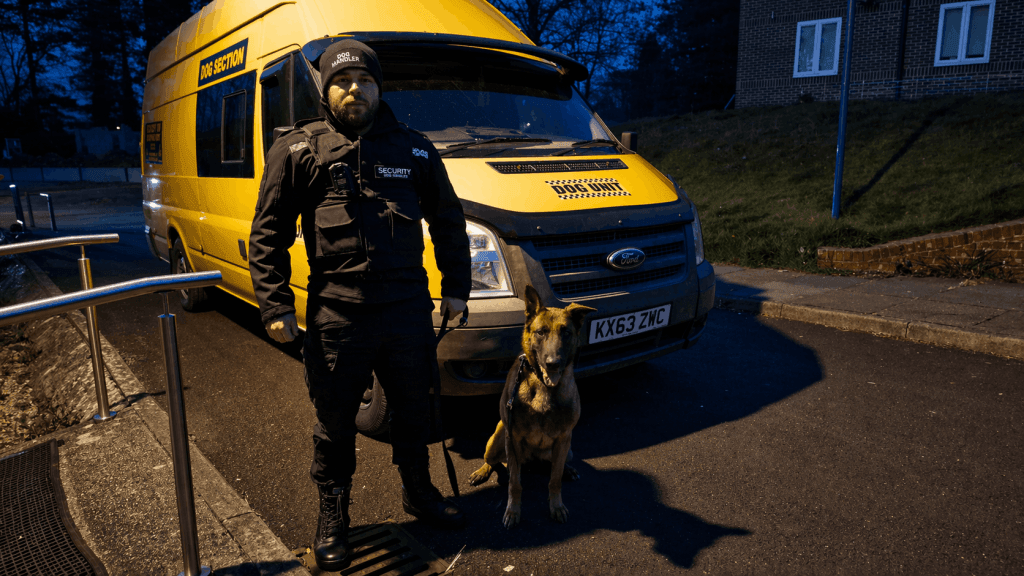
A trained security dog handler can patrol approved areas, check agreed access points and follow factory-specific safety, reporting and escalation procedures when damage or suspicious activity is identified.
Factory security should protect the assets and access points most likely to affect output, restart times and business continuity if an incident occurs.
Specialist tools, removable components and mobile equipment may be targeted during reduced activity or shutdown periods.
Metals, components, packaged products and other high-value materials may remain exposed in production or storage areas.
Cable, fuel stores, generators and external utility equipment can be damaged or removed, affecting site operation.
Intrusion into production, maintenance or restricted areas can create safety, contamination and operational concerns.
Fire setting or damage to plant, vehicles, buildings and waste areas can cause serious disruption and insurance exposure.
Even limited damage to a critical access point, machine or utility area can delay a planned production restart.

Factory sites require security patrols that respect live production, shift patterns, vehicle movements and restricted operational areas.
CCTV and access controls can monitor selected points, but they may not confirm damage, interference or activity across wider yards and perimeter areas.
A trained dog-and-handler team can patrol approved routes, check priority areas and report concerns without entering restricted production zones unless specifically authorised.
Read how our security dog handler services are planned and managed.
Patrols can check agreed gates, fencing, service entrances and external doors for interference or damage.
Approved routes can include external plant, tooling stores, fuel areas and other priority locations.
A visible dog-and-handler presence supports security when production activity and staffing are reduced.
Open gates, damaged locks, disturbed materials and unusual activity can be identified during agreed patrols.
Patrol instructions can reflect PPE, hygiene, vehicle, restricted-zone and other factory safety requirements.
Relevant observations are recorded and escalated through the factory's nominated contacts and procedures.
Security dog handler cover is most relevant where valuable machinery, materials or finished goods remain on site during shutdowns, low-staff periods or recurring security concerns.
Deployment is planned around shift patterns, safe patrol routes, critical external areas, existing controls and the operational impact of a breach.
Production stops or staffing falls while machinery, materials and finished goods remain on site.
The factory has experienced attempted entry, asset loss, vandalism or repeated perimeter interference.
External plant, tooling, fuel, metals or other valuable assets remain accessible outside production hours.
Contractor activity, temporary access changes or planned works create a short-term increase in exposure.
Yards, service roads, utility areas and separate entrances require active checks across the site.
Priority external areas are not fully covered by cameras, alarms or one fixed security position.
Cover planned around production
A clear four-step process defines approved patrol routes, factory safety rules, reporting contacts and the required cover period before deployment.
Step 1
We review shift patterns, shutdowns, access points, priority assets and existing controls.
Step 2
Approved routes, restricted zones, PPE requirements, reporting and escalation are agreed.
Step 3
Deployment is arranged around the site layout, required hours and operational environment.
Step 4
Agreed patrols, observations and incidents are documented and reported to the nominated contact.
If a factory has suffered an intrusion, security-system failure or unexpected shutdown, Colosseum K9 can assess temporary or ongoing cover subject to site information and team availability.
Security dog handler services for exposed commercial, industrial and vacant sites across the UK.
Patrols are planned around the areas most exposed to theft, trespass, damage or disruption.
Security dogs are managed with control, rest and safe working practices.
Available across the UK for single-site, short-term, emergency and multi-site requirements.
Operational experience across commercial, industrial, vacant property and site-security environments.
Incidents, damage and suspicious activity are reported through agreed site procedures.
Support for planned cover, short-notice incidents, site transitions and periods of increased risk.
Practical answers about trained security dog handler cover for factories and production sites.
Cost depends on the factory size, approved patrol areas, required hours, risk level and operational restrictions. We review the requirement and quote for the cover actually needed.
Yes, where safe routes and site rules are agreed. Deployment instructions should cover vehicle movements, production areas, PPE, hygiene controls, restricted zones and emergency procedures.
Deployed handlers hold the relevant SIA licence and are vetted before assignment. Dog teams receive recognised operational training, including NASDU training where applicable, and are assessed for suitability before deployment.
Approved routes may include external boundaries, gates, service roads, loading access, utility areas and safe internal zones. Restricted production areas are excluded unless the client specifically authorises them.
Yes. Cameras and access systems monitor selected points, while a dog-and-handler team provides visible movement, physical checks and on-site assessment across agreed areas.
Yes, subject to location, safe access and team availability. Cover can be planned for weekends, maintenance periods, seasonal shutdowns, security failures or other higher-risk periods.
Routes, timings, access permissions and restricted zones are agreed before deployment. The handler follows site instructions and does not enter operational areas outside the authorised scope.
The handler records relevant observations and follows the agreed escalation process. Urgent threats are handled through the site's emergency procedure and other concerns are reported to the nominated contact.
The dog stays with its trained handler. Patrols are planned around workers, visitors, entrances and public areas. Any concern is reported using the agreed process.