

Trespass & Urban Exploration
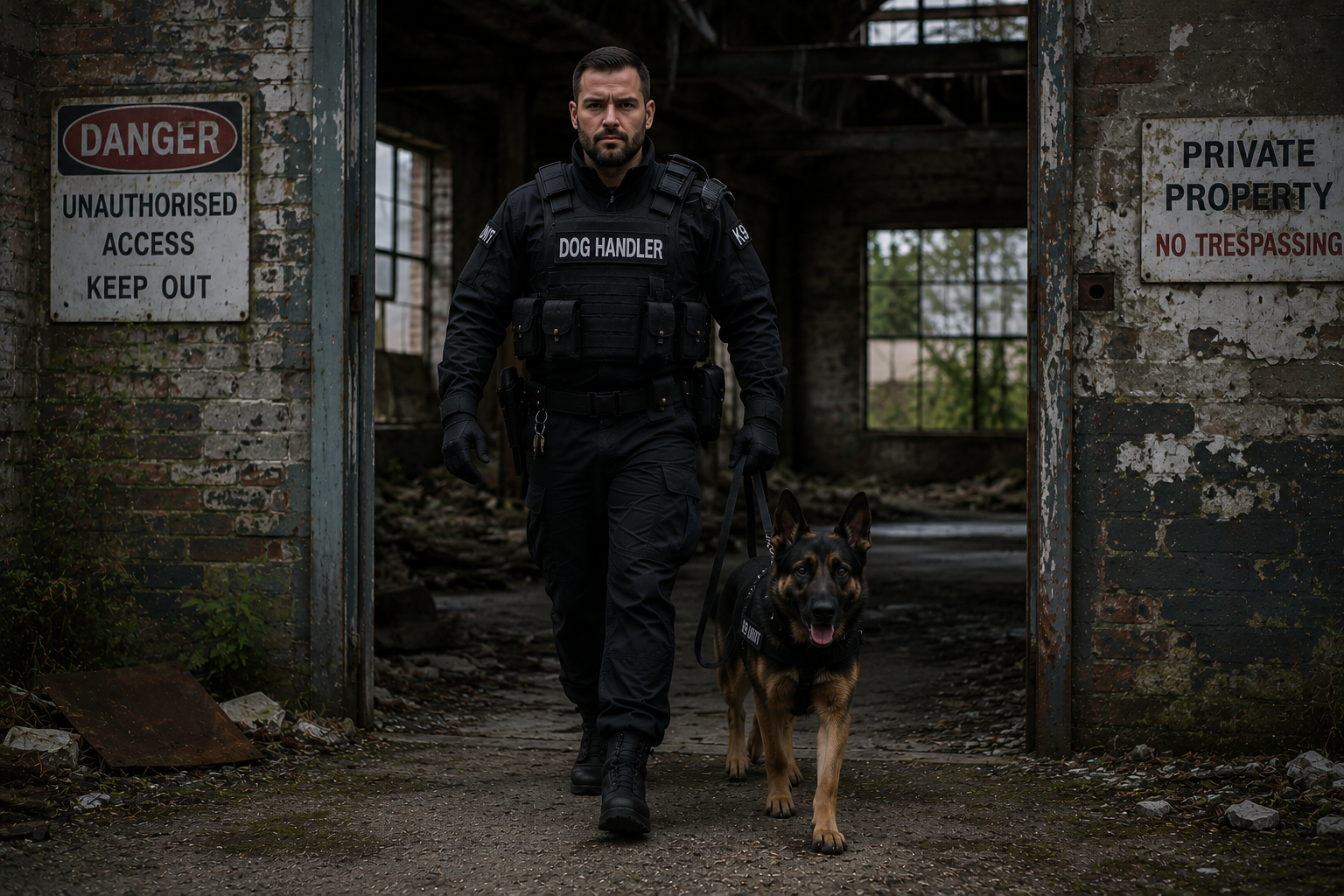
Empty buildings can attract people seeking access to roofs, internal rooms, service areas or hazardous structures.
Vacant Property Security Services
 NASDU
NASDU SafeContractor
 SIA
SIA SafePQQ
 Fully
Fully BS 7858
 ISO 9001
 BS 8517-1
Client feedback repeatedly highlights professionalism, responsiveness and short-notice deployment.

Vacant buildings become more exposed when routine occupancy, maintenance and natural surveillance stop. Doors, windows, service entrances and boundary defects can be tested repeatedly without normal staff activity drawing attention.
A single intrusion can lead to forced access, copper and material stripping, vandalism, fire damage, roof access or unauthorised occupation. Repair costs, clean-up, insurance administration and delayed sale or redevelopment can continue long after the incident.
Large or compartmented buildings can contain service yards, roof routes, outbuildings and concealed access points that are difficult to observe from one fixed position. Conditions may also change between inspections.
A trained security dog handler can patrol agreed safe areas, check vulnerable access points, identify changes and follow the site reporting and escalation procedure when damage or suspicious activity is found.
An empty commercial building can change quickly after a break-in. A damaged shutter, open door or missing material may go unnoticed between routine visits. We agree patrol areas and reporting contacts with the owner or managing agent so concerns are identified and passed on promptly.
Empty buildings can attract people seeking access to roofs, internal rooms, service areas or hazardous structures.
Signs of occupation, forced entry or repeated presence require early reporting so the property owner can respond through the correct process.
Cable, pipework, fixtures, metals and building materials may be removed, causing damage beyond the value of the stolen items.
Waste, unsecured rooms and concealed areas can be targeted for fire setting, creating serious property and neighbouring-site risk.
Broken windows, damaged doors, graffiti and deliberate internal damage can increase repair costs and make repeat access easier.
Damaged locks, shutters, doors, windows or fencing may create a repeat entry route until repairs are completed.

Vacant properties often require an active presence between inspections, maintenance visits and contractor attendance.
CCTV can record activity, but it may not confirm whether a door has been forced, a window has been opened or a previously secure area has changed.
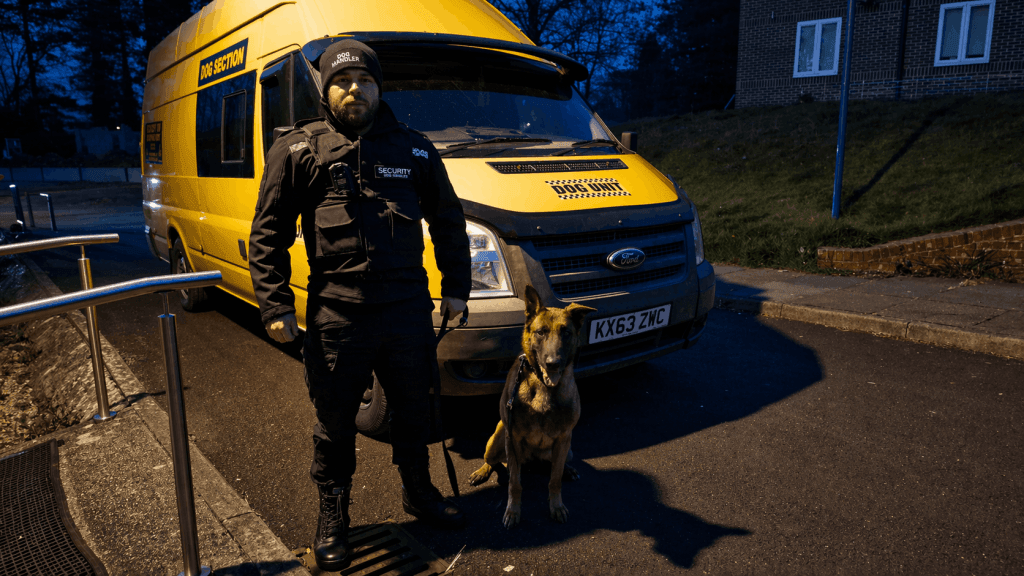
A trained dog-and-handler team can patrol approved areas, check agreed access points, document concerns and escalate incidents through the property owner's procedure.
A controlled dog-and-handler team shows that the property is actively checked despite being unoccupied.
Patrols can check agreed doors, windows, gates, shutters and boundary sections for interference or damage.
New damage, waste, disturbed materials and signs of occupation can be identified during agreed patrols.
Patrol routes and timings can vary within the agreed assignment instructions, reducing predictability.
Relevant observations and damage are recorded and communicated through the agreed reporting channel.
The handler assesses concerns from a safe position and follows the agreed contact and emergency procedures.
Security dog handler cover is most relevant where an unoccupied building has weak access points, repeat trespass, valuable remaining materials or a period of increased exposure.
Cover is planned around the building condition, approved patrol areas, known hazards, incident history and the client's reporting requirements.
The building has become empty and routine staff presence has stopped while assets or fixtures remain.
Unauthorised access has occurred before or continues after repairs and re-securing work.
Doors, windows, shutters, locks or fencing show recent damage or interference.
Cable, pipework, plant, fixtures or stored materials remain inside or around the property.
The site is awaiting sale, letting, refurbishment or demolition and has limited daily activity.
Multiple access points, outbuildings or low natural surveillance make meaningful fixed-position oversight difficult.
Cover planned around the property
A clear four-step process defines approved patrol areas, known hazards, reporting contacts and the required shift pattern before deployment.
Step 1
We review occupancy status, access points, known hazards, incidents and current site controls.
Step 2
Approved routes, restricted areas, reporting and escalation responsibilities are agreed.
Step 3
Deployment is arranged around the property layout, risk level and required hours.
Step 4
Agreed checks, condition observations and incidents are recorded and reported to the site contact.
If a property has been broken into, recently vacated or left exposed after damage, Colosseum K9 can assess short-term or ongoing cover subject to site information and team availability.
Dog unit and security cover delivered across exposed commercial, industrial and vacant sites since 2018.
Patrols are planned around the areas most exposed to theft, trespass, damage or disruption.
Security dogs are managed with control, rest and safe working practices.
Available across the UK for single-site, short-term, emergency and multi-site requirements.
Operational experience across commercial, industrial, vacant property and site-security environments.
Incidents, damage and suspicious activity are reported through agreed site procedures.
Support for planned cover, short-notice incidents, site transitions and periods of increased risk.
Practical answers about protecting empty commercial buildings with trained security dog handler teams.
Cost depends on the property size, approved patrol areas, known hazards, required hours and risk level. We review the site information and provide a quote based on the actual cover required.
Start time depends on location, site information, safe access arrangements and team availability. Urgent requirements can be assessed once the property risks, keys, contacts and patrol restrictions are confirmed.
Deployed handlers hold the relevant SIA licence and are vetted before assignment. Dog teams receive recognised operational training, including NASDU training where applicable, and are assessed for suitability before deployment.
Patrol areas are agreed before cover begins. They may include external boundaries, gates, doors, shutters, service yards and safe internal areas where access, lighting and site conditions permit.
The two measures perform different roles. CCTV can monitor and record activity, while a dog-and-handler team provides visible movement, physical checks and on-site assessment. The suitable arrangement depends on the property and existing controls.
The service can support empty warehouses, offices, retail units, industrial buildings, development sites and other commercial properties where safe patrol routes can be agreed. The cover provides active vacant building security and empty building security through on-site dog-handler patrols rather than remote monitoring.
Only where the client confirms that access is authorised and the route is safe. Unsafe floors, exposed services, asbestos controls, poor lighting and other restrictions must be identified before deployment.
The handler records relevant observations and follows the agreed escalation process. Urgent threats are handled through the site's emergency procedure, while non-urgent defects are reported to the nominated contact.
The dog stays with its trained handler. Patrols are planned around workers, visitors, entrances and public areas. Any concern is reported using the agreed process.