
Machinery & Vehicle Theft
Tractors, quad bikes, trailers, telehandlers and other agricultural vehicles may be targeted or stolen to order.

Farm Security Services
 NASDU
NASDU SafeContractor
 SIA
SIA SafePQQ
 Fully
Fully BS 7858
 ISO 9001
 BS 8517-1
Client feedback repeatedly highlights professionalism, responsiveness and short-notice deployment.

Farms often combine isolated buildings, machinery stores, fuel tanks, yards, livestock areas and long access tracks across locations with limited natural surveillance.
Risk increases overnight, during seasonal shutdowns and when equipment is left away from the main farmhouse. A theft can remove machinery or tools needed for time-critical agricultural work.
Remote gates, public rights of way, weak boundaries and separate outbuildings can make suspicious activity difficult to detect from one position or through cameras alone.
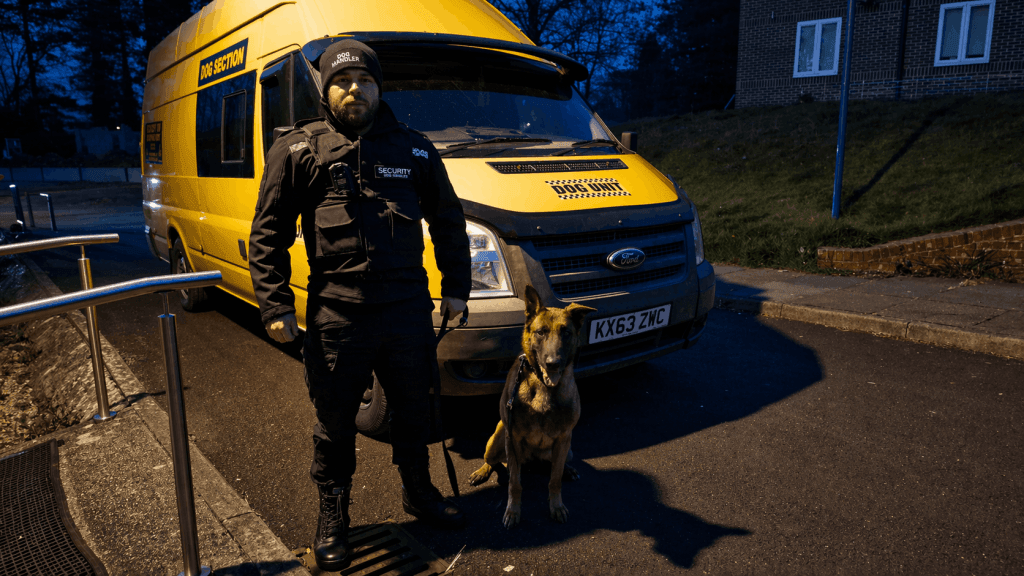
A trained security dog handler can patrol agreed safe routes, check priority buildings and access points, report interference and follow the farm's escalation procedure.
Farm security should focus on machinery, vehicles, livestock, fuel and isolated buildings where theft or damage could interrupt essential work.
Tractors, quad bikes, trailers, telehandlers and other agricultural vehicles may be targeted or stolen to order.
Power tools, GPS units, attachments and removable components can be taken from vehicles, workshops and machinery stores.
Diesel tanks, bowsers and vehicle fuel may be exposed in remote yards or poorly observed areas.
Unauthorised access, damaged gates and livestock theft can create financial loss, welfare concerns and operational disruption.
Separate barns, workshops and stores may contain equipment, chemicals, feed or other valuable agricultural assets.
Remote tracks and fields can attract unauthorised access, dumping, vandalism or deliberate fire setting.

Farm security requires patrol routes that reflect rural distances, livestock movement, machinery hazards and the separation between buildings.
CCTV can monitor selected gates or yards, but it may not physically check a damaged lock, disturbed fuel area or isolated outbuilding.
A trained dog-and-handler team can patrol approved routes, check priority areas and report concerns while maintaining safe separation from livestock and working machinery.
Read how our security dog handler services are planned and managed.
Approved routes can include external barns, workshops, machinery stores and other priority buildings.
Patrols can identify open gates, damaged locks, disturbed tracks and signs of unauthorised entry.
A controlled dog-and-handler presence shows that isolated areas remain actively checked outside working hours.
Agreed patrols can check accessible fuel stores, vehicle areas and equipment holdings for interference.
Routes and controls are agreed to maintain safe separation from livestock, farm dogs and other animals.
Relevant observations are recorded and escalated through the farm's nominated contacts and procedures.
Security dog handler cover is most relevant where valuable machinery, fuel or livestock remain across isolated buildings and yards during low-activity periods.
Deployment is planned around farm layout, safe routes, livestock controls, vehicle movement, priority assets and realistic patrol distances.
Barns, workshops and stores sit away from occupied buildings or regular public activity.
Machinery, fuel, tools, livestock or farm property have been targeted before.
Tractors, quad bikes, telehandlers, GPS equipment or attachments remain on the premises.
Diesel, tools, parts or chemicals are held in external tanks, workshops or separate buildings.
Harvest, lambing, machinery delivery or other seasonal activity changes site use and asset exposure.
Farm tracks, field gates and public routes create several possible approaches to the premises.
Cover planned around the farm
A clear four-step process defines approved routes, livestock controls, priority assets, reporting contacts and required hours before deployment.
Step 1
We review buildings, access tracks, machinery, fuel, livestock areas, hazards and previous incidents.
Step 2
Approved routes, animal controls, vehicle movement, reporting and escalation are agreed.
Step 3
Deployment is arranged around the farm layout, required hours and practical patrol coverage.
Step 4
Agreed checks, observations and incidents are documented and reported to the nominated contact.
If a farm has suffered machinery, fuel or livestock theft, a break-in or a security-system failure, Colosseum K9 can assess temporary or ongoing cover subject to site information and team availability.
Security dog handler services for exposed commercial, industrial and vacant sites across the UK.
Patrols are planned around the areas most exposed to theft, trespass, damage or disruption.
Security dogs are managed with control, rest and safe working practices.
Available across the UK for single-site, short-term, emergency and multi-site requirements.
Operational experience across commercial, industrial, vacant property and site-security environments.
Incidents, damage and suspicious activity are reported through agreed site procedures.
Support for planned cover, short-notice incidents, site transitions and periods of increased risk.
Practical answers about trained security dog handler cover for farms and rural premises.
Cost depends on farm size, patrol distances, required hours, priority assets and the number of buildings or zones requiring checks. We assess the requirement before providing a quote.
Approved routes may include farmyards, external barns, machinery stores, workshops, fuel areas, gates and access tracks where conditions are safe.
Deployed handlers hold the relevant SIA licence and are vetted before assignment. Dog teams receive recognised operational training, including NASDU training where applicable, and are assessed for suitability before deployment.
Only with agreed controls and safe separation. Livestock areas, farm dogs, working machinery and animal movement must be considered before routes are approved.
Yes. Electronic systems monitor selected points, while a dog-and-handler team provides visible movement, physical checks and on-site assessment across approved routes.
Yes, subject to location, safe access and team availability. Cover can support harvest periods, machinery deliveries, incident recovery or other higher-risk periods.
That depends on travel distance, safe access, separate buildings and the frequency of meaningful checks. The patrol scope must be realistic for the available shift time.
The handler records relevant observations and follows the agreed escalation process. Urgent threats are handled through the farm's emergency procedure and other concerns are reported to the nominated contact.
The dog stays with its trained handler. Patrols are planned around workers, visitors, entrances and public areas. Any concern is reported using the agreed process.