

Plant, Tool & Fuel Theft
Excavators, attachments, generators, fuel and specialist tools may be targeted when demolition activity stops.

Demolition Site Security Services
 NASDU
NASDU SafeContractor
 SIA
SIA SafePQQ
 Fully
Fully BS 7858
 ISO 9001
 BS 8517-1
Client feedback repeatedly highlights professionalism, responsiveness and short-notice deployment.

Demolition sites change quickly as structures are stripped, access routes move and boundaries are opened or repositioned. Security risks can therefore change from one phase to the next.
Outside working hours, plant, fuel, tools, cable and recoverable metals may remain exposed while partially demolished structures attract trespassers, urban explorers and other unauthorised visitors.
An intrusion can cause theft, vandalism, arson, fly-tipping or entry into unstable and hazardous areas. The resulting investigation, re-securing work and safety review can delay the demolition programme.
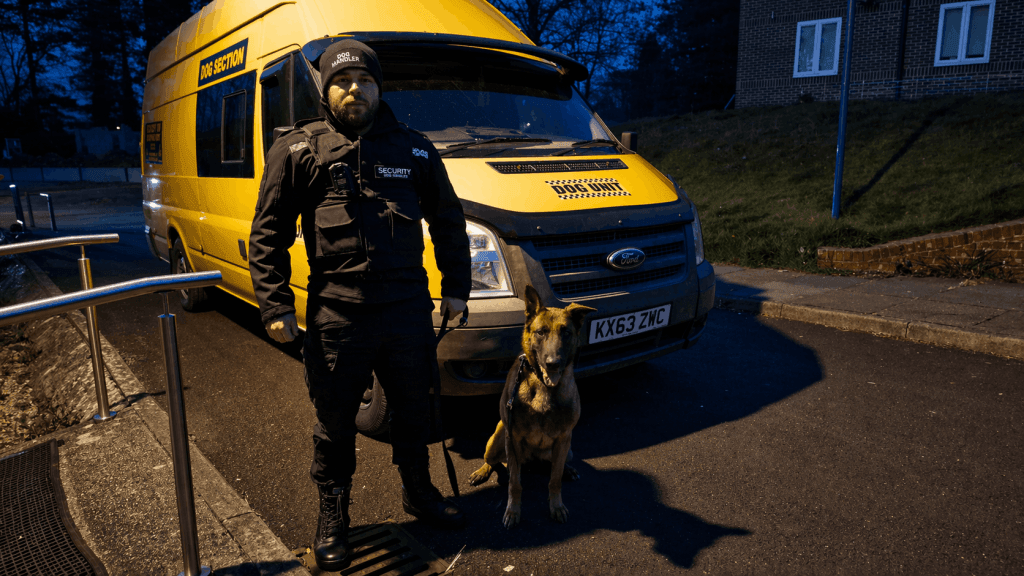
A trained security dog handler can patrol approved safe routes, check agreed gates and boundaries, identify interference and follow the site's reporting and escalation procedure.
Demolition security should protect valuable assets while preventing unauthorised access to unstable structures, exclusion zones and changing work areas.
Excavators, attachments, generators, fuel and specialist tools may be targeted when demolition activity stops.
Recovered metals, cable and stripped materials can attract theft from storage areas and partially cleared buildings.
People may enter to film, climb or explore without understanding unstable structures and demolition hazards.
Fire setting or damage to plant, cabins, materials and remaining structures can interrupt work and increase risk.
Removed structures, relocated hoarding and new vehicle routes can create access points that did not exist earlier.
Open or weak access routes can attract dumping, vehicle entry or unauthorised occupation of remaining buildings.

Demolition sites require patrol instructions that change with the work programme and clearly exclude unstable, hazardous and live-operating areas.
CCTV can monitor selected points, but changing structures, machinery and hoarding may create new blind areas as demolition progresses.
A trained dog-and-handler team can patrol approved routes, check priority access points and report changes without entering exclusion zones outside the authorised scope.
Approved routes can be updated as buildings, hoarding, compounds and vehicle access change.
Patrols can identify forced gates, moved fencing, damaged hoarding and signs of attempted entry.
A controlled dog-and-handler team shows that the site remains actively checked after demolition work stops.
Disturbed materials, damaged locks and unusual activity can be identified during agreed patrols.
The handler follows approved routes and does not enter unstable structures, live work areas or prohibited zones.
Relevant observations are recorded and escalated through the demolition site's agreed procedures.
Security dog handler cover is most relevant where a demolition site has valuable plant or recoverable materials, repeated trespass or changing boundaries during low-activity periods.
Deployment is planned around the current demolition phase, approved routes, exclusion zones, remaining structures, priority assets and the time needed for meaningful checks.
Structures, access routes and work zones are changing while plant and materials remain on site.
Fixtures, cable, metals and reusable materials are being removed or stored before clearance.
The site has experienced unauthorised entry, material loss, vandalism or repeated interference.
Empty or partly stripped structures remain accessible and may attract trespass or occupation.
Demolition activity stops temporarily while plant, fuel and materials remain exposed.
Hoarding, fencing, gates or access controls have been damaged or moved.
Cover planned around each phase
A clear four-step process defines the current site layout, approved patrol routes, exclusion zones, reporting contacts and required hours before deployment.
Step 1
We review the current phase, site layout, access points, hazards, assets and previous incidents.
Step 2
Approved routes, exclusion zones, PPE requirements, reporting and escalation are agreed.
Step 3
Deployment is arranged around the site conditions, required hours and practical coverage requirement.
Step 4
Agreed patrols, observations and incidents are documented and reported to the nominated contact.
If a demolition site has suffered a break-in, perimeter failure or unexpected shutdown, Colosseum K9 can assess temporary or ongoing cover subject to site information and team availability.
Security dog handler services for exposed commercial, industrial and vacant sites across the UK.
Patrols are planned around the areas most exposed to theft, trespass, damage or disruption.
Security dogs are managed with control, rest and safe working practices.
Available across the UK for single-site, short-term, emergency and multi-site requirements.
Operational experience across commercial, industrial, vacant property and site-security environments.
Incidents, damage and suspicious activity are reported through agreed site procedures.
Support for planned cover, short-notice incidents, site transitions and periods of increased risk.
Practical answers about trained security dog handler cover for demolition projects and partially cleared sites.
Cost depends on site size, demolition phase, approved patrol routes, required hours and identified hazards. We assess the current requirement before providing a quote.
Yes, where approved routes, work times and site rules are agreed. Patrols must remain separate from live demolition operations and prohibited areas.
Deployed handlers hold the relevant SIA licence and are vetted before assignment. Dog teams receive recognised operational training, including NASDU training where applicable, and are assessed for suitability before deployment.
The client identifies exclusion zones and known hazards before deployment. Handlers follow approved routes and do not enter unsafe, live-work or unauthorised areas.
Yes. Routes and priority areas should be reviewed when structures, hoarding, compounds or vehicle access change.
Yes. Electronic systems monitor selected points, while a dog-and-handler team provides visible movement, physical checks and on-site assessment across approved routes.
Yes, subject to location, safe access and team availability. Cover can support weekends, project pauses, perimeter failures or periods between demolition phases.
The handler records relevant observations and follows the agreed escalation process. Urgent threats are handled through the site's emergency procedure and other concerns are reported to the nominated contact.
The dog stays with its trained handler. Patrols are planned around workers, visitors, entrances and public areas. Any concern is reported using the agreed process.