

Urban Explorers
People may enter to film, climb machinery or access restricted structures without understanding the hazards present.
Quarry Security Services
 NASDU
NASDU SafeContractor
 SIA
SIA SafePQQ
 Fully
Fully BS 7858
 ISO 9001
 BS 8517-1
Client feedback repeatedly highlights professionalism, responsiveness and short-notice deployment.

Quarries combine long boundaries, open ground, heavy plant, restricted structures and water filled excavations across areas that may be impossible to observe from one position.
Exposure increases outside operating hours, during shutdowns and in warm weather, when natural surveillance falls and remote access points are easier to approach.
People entering to explore or swim may trigger emergency action even where no theft occurs. Separately, stolen fuel, damaged cabling or vandalised equipment can interrupt production.
The security requirement must therefore account for public access, asset exposure, safe patrol routes and the time needed to check priority areas effectively.
Quarry incidents can create public safety concerns, financial loss and operational disruption. These are the main risks requiring out of hours control.
People may enter to film, climb machinery or access restricted structures without understanding the hazards present.
Quarry lakes and flooded excavations can attract swimmers during warm weather, creating a serious risk of emergency response and investigation.
Diesel can be removed from tanks, bowsers and machinery, leaving equipment unavailable and delaying planned work.
Electrical cabling and processing components can be removed or damaged, causing repair costs and operational downtime.
Cut fencing, forced gates and damaged locks can create repeat entry routes until suitable repairs are completed.
Damage to vehicles, cabins, conveyors or processing equipment can interrupt production and create insurance concerns.

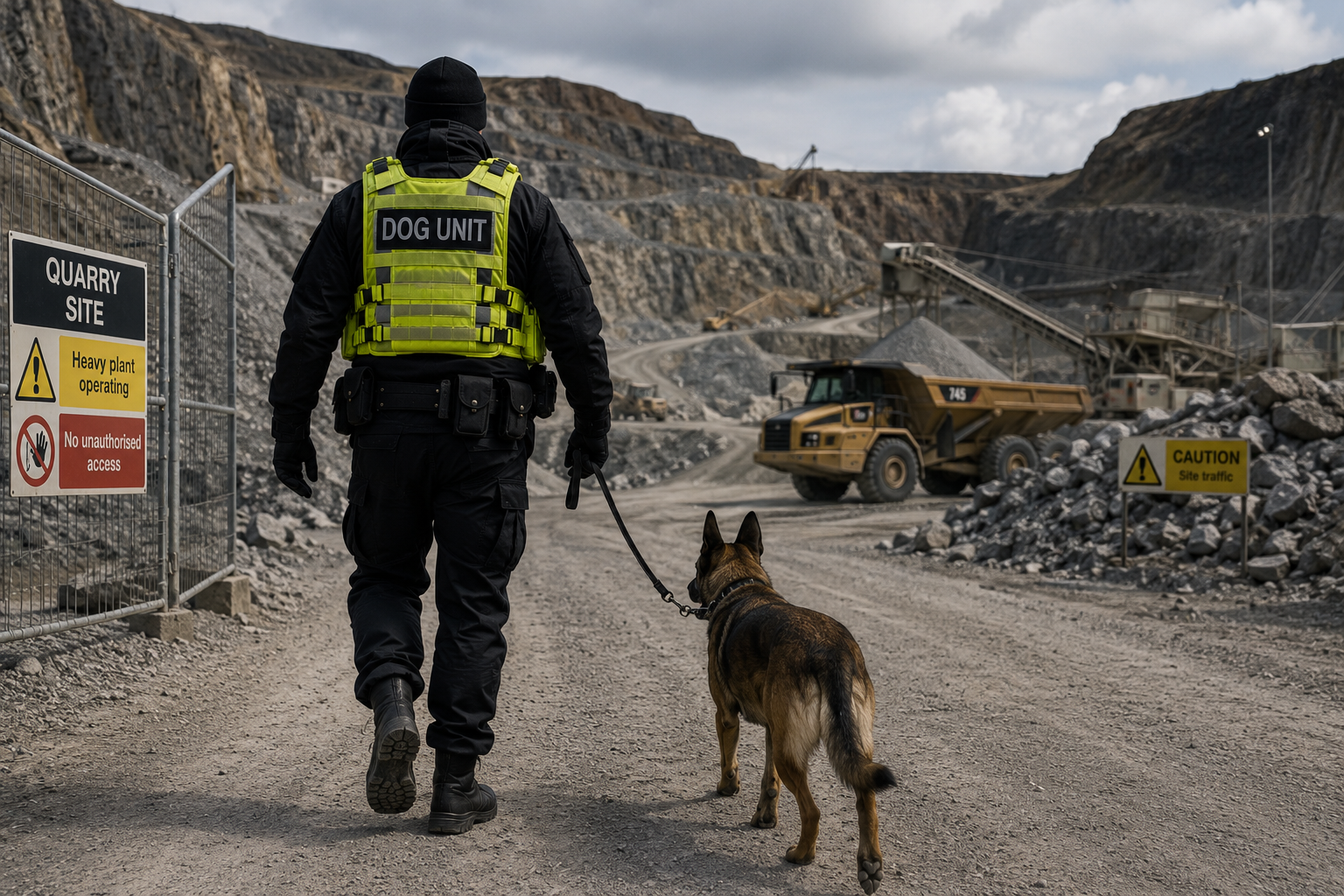
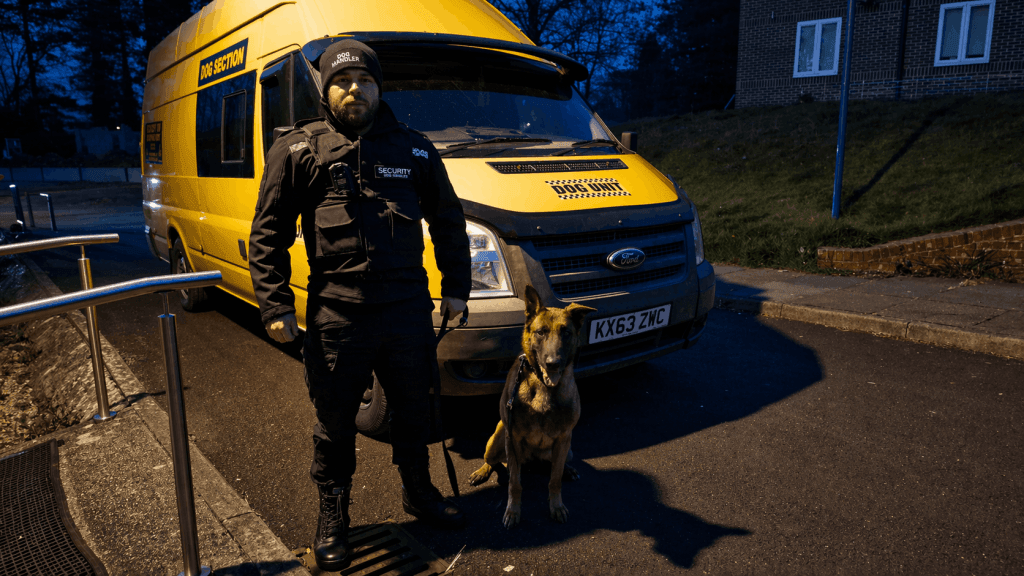
Security dog handlers provide an active presence across authorised quarry areas that may be difficult to supervise through cameras or a fixed position alone.
The dog can alert to movement, scent or sound, while the handler remains responsible for assessing the situation and controlling the response.
Patrols follow approved routes, restricted area controls, lone working arrangements and site specific escalation procedures.
Read how our security dog handler services are planned and managed.
Checks can be directed towards selected gates, boundaries, service roads and approved priority areas.
A visible dog handler team shows that the quarry remains actively guarded outside normal operating hours.
The dog can alert the handler to activity before its source can be clearly seen from the patrol route.
The handler can identify open gates, damaged locks or signs that an entrance has been interfered with.
Suspicious activity is assessed from a safe position before the agreed escalation procedure is followed.
Relevant observations, damage and incidents are recorded through the client’s agreed reporting channels.
Security dog handler cover is most suitable where the layout, operating pattern or existing controls leave important areas difficult to supervise.
The required cover should reflect patrol distances, safe access, the number of priority areas and the time available to complete meaningful checks.
Fencing, signage or cameras have not prevented repeated entry attempts.
Problems occur when normal quarry activity and natural surveillance have stopped.
Priority areas are too far apart to supervise effectively from one fixed position.
Access points, plant areas, fuel stores and water edges require separate checks.
Shutdowns, repairs, reduced staffing or seasonal activity create additional exposure.
The site needs someone able to inspect interference and assess activity rather than only receive an alert.
Quarry Cover Built Around Site Risk
Clear scope, safe patrol planning and defined reporting arrangements are established before cover begins.
Step 1
We review operating hours, priority areas, previous incidents and the requested shift pattern.
Step 2
Restricted zones, access rules, welfare provisions, reporting and escalation are agreed before deployment.
Step 3
The team is matched to the location, site instructions and practical coverage requirement.
Step 4
The handler completes agreed checks and communicates relevant findings through the client procedure.
We can assess short-term or ongoing cover following an incident, security failure or unexpected closure, subject to site information and team availability.
Security dog handler services for exposed commercial, industrial and vacant sites across the UK.
Patrol priorities are based on approved routes, site limitations and the client’s identified security concerns.
Teams receive recognised dog handler training, including NASDU where applicable.
Operatives hold the relevant SIA licence and are screened in line with BS 7858 requirements.
General-purpose security dog deployments follow practices aligned with BS 8517-1.
Reporting contacts, escalation responsibilities and operational expectations are agreed before cover begins.
Support is available for individual quarries, multi-site operators, temporary requirements and ongoing contracts.
Practical answers about pricing, site requirements, patrol planning and deployment.
Pricing depends on the location, required hours, quarry size, patrol distances and number of handlers needed. We review the requirement before providing a free, no-obligation quote.
We normally need the quarry address, required cover hours, approximate site size, main areas of concern and details of any previous incidents.
Yes, provided authorised routes, restricted areas, vehicle movements and emergency procedures are clearly defined before deployment.
Water edges and restricted areas must be identified in the site instructions. Patrols remain on approved safe routes and do not enter hazardous zones.
This depends on the site size, patrol distances, number of priority areas and required check frequency. Large or divided sites may require more than one handler.
Yes. Cover can support shutdowns, closures, repairs, short-term incidents and temporary increases in risk, subject to availability.
Yes. Multi-site requirements can be reviewed together, with the required hours and level of cover assessed separately for each location.
This depends on location, required hours, team availability and whether the necessary site information and safe working arrangements are ready.
The dog stays with its trained handler. Patrols are planned around workers, visitors, entrances and public areas. Any concern is reported using the agreed process.